
It starts with a message. A too-good-to-be-true stock tip. A luxury skincare brand offering deep discounts from a page that didn’t exist last week. A messaging group promising guaranteed returns with zero risk.
Behind these “opportunities” are organised, well-resourced criminal networks — operating across borders, platforms, and industries. They move fast, adapt constantly, and rely on the fact that no single organisation can see the full picture of their operations.
Disrupting them requires collaboration: law enforcement and technology companies sharing information, acting together, and moving just as fast as the scammers do. In Singapore, that’s exactly what’s happening.
A partnership built on sustained information sharing
Over the past two years, Meta and the Singapore Police Force (SPF) have built an information sharing partnership designed to proactively identify and remove violating scam content. Rather than responding to individual reports, this collaboration focuses on proactive network disruption – where SPF information helps Meta’s investigators identify and dismantle entire ecosystems of bad actors. Similarly, Meta’s information has aided SPF in the arrest of seven men in 2025 for their suspected involvement in a transnational unlawful remote betting operation.
In 2026, information sharing between Meta and SPF has led to strong results:
- Uncovering Widespread Networks: Between January and June 2026, using information shared by SPF, Meta took action against more than 113,000 entities and pages connected to fraud and scams on Facebook and Instagram, with content predominantly involving investment scams where scammers lure victims in with promises of guaranteed or high investment returns. The information shared by SPF resulted in Meta actioning more than 5x the number of assets flagged. That’s not just accounts being taken down one by one. It’s the dismantling of interconnected networks where disabling one node leads investigators to connected scammers.
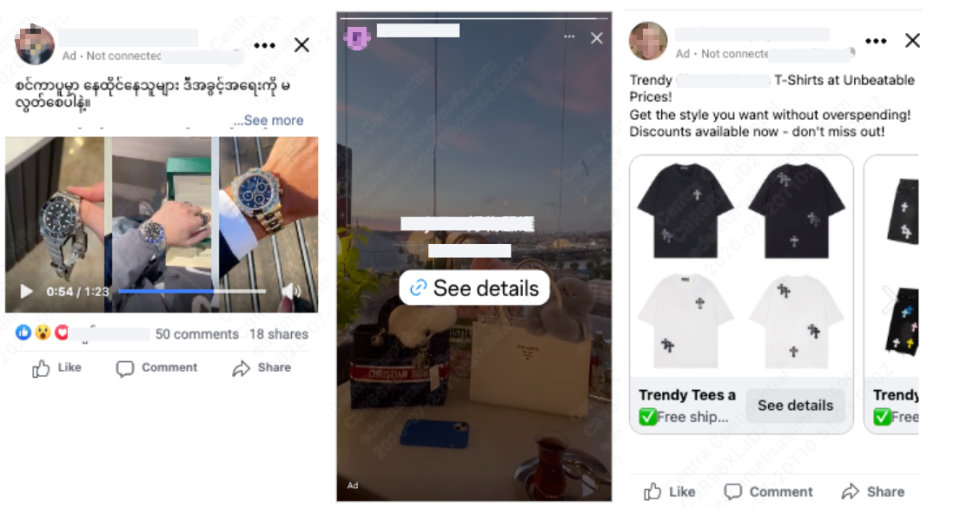
- Proactively Actioning Seasonal Scam Content: In June 2026 in anticipation of upcoming school holidays and the seasonal rise in scams, Meta and SPF conducted an enhanced disruption operation focused on e-commerce scams which promoted misleading pricing, fake promotional tactics for well known brands, exaggerated product claims, and a sense of urgency and scarcity. This resulted in Meta taking action against more than 33,600 entities.
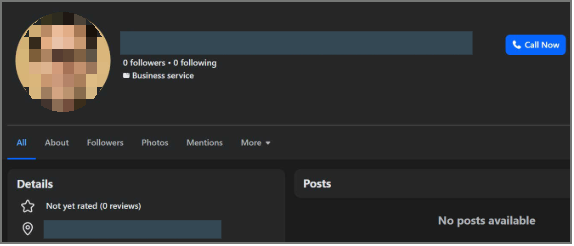
- Disrupting Networks Before The Damage: Through our ongoing collaborations, SPF information also flagged a newer scam vector: “shell pages”. These Pages look empty and harmless – no ads or violating content. But scammers had pre-built infrastructure, ready to be activated for scam campaigns at a moment’s notice. Working from SPF’s signals, in July 2026, we took action against over 3.6 million shell pages before they could be used – and we’re now pursuing further disruptions against this type of scam.
“Scammers count on the fact that no single organisation sees the full picture. What we’ve built with the Singapore Police Force turns that assumption on its head — their information helps us identify threats we might not see on our own, and our ability to act at scale means those networks can be dismantled before they reach more people. This is what effective collaboration looks like. Not just responding to scams after the fact, but proactively going after the infrastructure behind them.” – Daryl Poon, Director of Law Enforcement Outreach, APAC
“The Singapore Police Force has long recognised that tackling sophisticated scam networks requires a collaboration with international and private stakeholders. By partnering closely with industry partners, we can share scam signals that allow our partners to take action to disrupt the criminal infrastructure behind these scams. This recent operation demonstrates the power of police and private sector collaboration- scam infrastructure was decisively taken down, cutting off scammers’ ability to defraud Singaporeans. SPF will work with Meta and other online service providers to expand data sharing and strengthen scam disruption efforts.” – Senior Assistant Commissioner of Police Justin Wong, Commander Cyber Command, Singapore Police Force
Broader anti-scam efforts
This work with the SPF sits within a wider ecosystem of anti-scam work that Meta is building on.
Across two weeks in May and June 2026, the US Department of Justice’s Scam Center Strike Force brought together Meta, Microsoft, Coinbase, Starlink, and other companies alongside the FBI, Secret Service, and law enforcement partners in the UK, Australia, Canada, New Zealand, and Thailand. As a result of this joint disruption, more than a million online assets were disrupted — including 1.4 million accounts, pages and groups across Facebook and Instagram, 20,000 Microsoft accounts, and thousands of Starlink kits — and the Royal Thai Police arrested 63 individuals involved in scam operations.
Meta, SPF and the National Crime Prevention Council (NCPC) also collaborate on public education campaigns designed to protect Singaporeans from scams. This year’s “One Step Ahead” campaign encourages the public to turn on in-app security features such as 2-FA (Two-Factor Authentication) and passkeys for Facebook and Instagram to enhance account protection, and use WhatsApp security features such as Linked Device Notifications. The campaign also promotes local resources such as the ScamShield website where users can learn more about different scam types and how to stay safe. So far, the campaign has reached 1.6 million people in Singapore.
Meta continues to invest in building defenses across its platforms and removing violating scam content. So far this year we’ve removed 65 million scam ads from Facebook and Instagram, with 94% of those ads removed before anyone reported them to us.
Meta supports a shared defense in which platforms, banks, telecommunications providers, and governments exchange signals and support their respective investigations and enforcement actions. That principle underpins our participation in the Industry Accord Against Online Scams and Fraud and the ASEAN Public Private Partnership Principles for Tackling Online Scams.
Scams are a global industry, run across platforms, apps, and borders. Meta’s work with the Singapore Police Force shows that shared information, acted on quickly, changes the equation. Because the best defence against organised crime is an equally organised response.
To learn more about staying safe online, visit the Meta Scam Protection Center. In Singapore, you can download ScamShield for real-time scam protection.


